


Books
Lise Cristiani
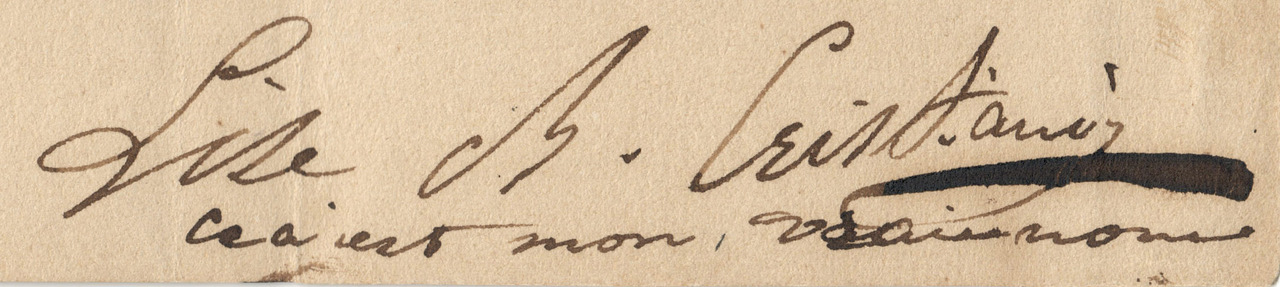
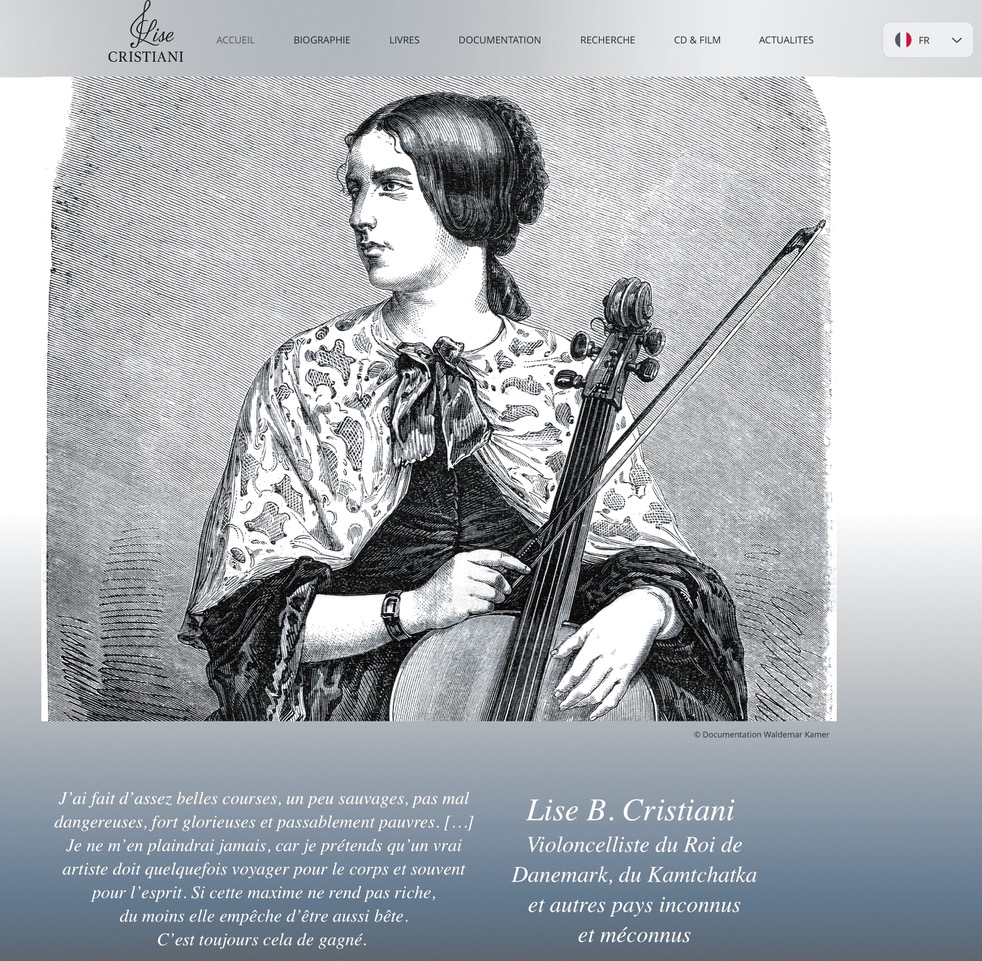
Au bout de quatre années de recherches en plusieurs pays, Waldemar Kamer publie la première biographie de la première violoncelliste professionnelle Lise Cristiani (1825–1853) pour son bicentenaire le 4 décembre 2025. Self-made-woman avant la lettre, Lise Cristiani a longtemps été un mythe pour les musiciens. Enfant illégitime du Faubourg Saint-Denis – comme W. K. l'a découvert – Lise est issue d'une famille recomposée d'artistes, les Barbier. Elle entre dans l'histoire comme la première femme à braver les conventions de son époque en montant sur une scène de concert avec un violoncelle et est la première musicienne occidentale à traverser la Sibérie jusqu'à la péninsule du Kamtchatka. Lise joue pour des rois et des princes comme pour des exilés politiques, des mineurs, des matelots et même pour des baleines. Première Violoncelliste du roi du Danemark, Offenbach lui dédie une Sérénade et Mendelssohn sa seule Romance sans paroles pour violoncelle ; en signe de reconnaissance, elle lui écrit un petit Andante. Partie à la conquête de l'extrême Sibérie, elle parcourt trente-six mille kilomètres souvent par -40°, recouvrant son Stradivarius (désormais Le Cristiani) d'une peau de loup. Vivant des aventures dignes de Michel Strogoff, passant par Kiev et Odessa, elle meurt du choléra dans le Caucase à 27 ans.

Voir le livre
Paru en 2025 chez bleu nuit éditeur (Paris)
Toutes les informations : lisecristiani.com
Behind the façades of Paris - encounters with remarkable people

In twenty years, Waldemar Kamer has had much time to explore the back streets of the City of Light. He arrived with his suitcase at the Gare du Nord when he was eighteen, he only knew one person in Paris – who threw him out the very next morning. He started as an au pair and was granted a place to sleep in the garage, under a Paris roof nonetheless.
This is where the conquest of a metropolis full of encounters with miscellaneous people began. The series of portraits of this book begins with that of a rich and well-born widow who was renting out a garret. The plush building had a view over the gardens of the Prime Minister's residence, the Hôtel Matignon, but he was not allowed through the main lobby. He had to use the service entrance, which led to a three hundred meter long underground corridor. It was under these roofs and in these corridors that he met the caretaker, servants and many other people who had come to Paris in search of fame and fortune: a cook, a fashion designer, a taxi-driver, a gigolo – all were about twenty years old.
Each chapter presents a different person or a group: Sorbonne or drama students, the members of a theatre company, two tramps in the metro, three market sellers, the centenarian neighbour, a Russian opera singer born 'before the Revolution', a mysterious lady with a fur cloak, a flamboyant count, a prince, many artists and bohemians. In the meantime, the author made his way through Paris; he left the garret and entered as a journalist and stage director for the opera through the main entrance of the very same houses where he used to only be allowed access through the service entrance. That did not stop him from looking behind the façade. He discovered the mediocrity of the ministers he interviewed and the weariness of the princes who threw grand receptions.
Even the stars were lonely: Arletty was old and blind and he told her poems over the phone; Marlene Dietrich wrote him one of her last letters, and he would read a poem by Goethe for Rudolf Nureyev – at his funeral.

View the book
Published in 2019 by Elmar (The Netherlands)
A family chronicle

An illustrated list of people - Table of contents
Like many refugee children and grand children, W.K. grew up with the stories of a far away world, East of the 'Iron curtain', that his family had to leave under tragic circumstances in 1945. His grandmother continued to live in that world and her apartment, filled with black and white pictures, resembled a mausoleum. One day, she opened the cupboard where she kept 'her treasures'. From the moment W.K. held them between his hands, his grandmother's father's diaries, her husband's letters and the memories of their eldest son, these documents never left him. Every year, new ones mysteriously appear to him. Since almost thirty years he has written to save these documents (illegible for people of his generation) and to restore this lost world, as if he were putting back together a torn up old picture, shred by shred. It is much more than writing, he is doing what his grandmother –who died a very long time ago- never was able to do while she was still alive: he is 'fixing' something…

In an article W.K. explains
the reasons behind this chronicle:
- Read the article (in English)
- The list of people (in English, with pictures)
- The Table of contents and the prologue
(of volume I, in German)
Volume I (1850-1915) finally finished in 2009 (1.000 pages)
Volume II (Gisela 1911-1937) is to be released in 2011 (1.000 pages)
Volume III (interviews and annexes) is to be released in 2012 (1.000 pages)